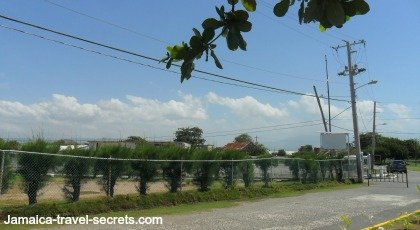
Port Royal reads like the plot of an adventure film. It was once called the richest and wickedest city on earth, a base for pirates and a hub of Caribbean trade. Today it is a small, quiet fishing village at the tip of the long sandbar that shelters Kingston Harbour. A trip to Kingston feels incomplete without a visit, and it is probably the only “city” in Jamaica that can be explored in full within a single day.
Before 1692: a buccaneer stronghold
According to the account on this site, Port Royal was found in 1518 and soon became a shipping centre of the Caribbean thanks to its position at the mouth of Kingston Harbour. The Spanish settled first. They searched for wealth but found little there, though they understood the strategic value of the place and held on to it until the English captured it in 1655.
Both powers wanted control because the harbour sat on most of the region’s trade routes. Once in charge, the English built forts to prevent a Spanish return. Spain was rich but weak, and Britain wanted a share of that wealth, so it encouraged attacks on Spanish ships. Buccaneers were recruited from across the world to defend the base and to raid, and the plunder piled up. By the account here, within seven years there was more ready cash in Port Royal, relative to its population, than in London.
The most famous of these men was Henry Morgan, who raided ships and even attacked cities. His best-known operation was the assault on Panama City in 1670, carried out with about two thousand men even though Spain and Britain had made peace. As Britain grew into a commercial power, the pirates became an embarrassment, and the Crown responded by knighting Morgan and making him Lieutenant Governor.
The earthquake of 7 June 1692
On the morning of 7 June 1692, a powerful earthquake destroyed much of the town. About thirty-three acres, close to two thirds of the settlement, sank into the sea. Thousands died at once, and many more perished afterwards from injuries and disease. Contemporaries treated it as divine judgement on a notorious city, and the port never recovered its former glory. Port Royal is described as the only sunken city in the New World.
After 1692
Some survivors rebuilt, but most moved to Kingston. The present-day village has few attractions beyond a yearly seafood festival, a handful of restaurants and a small hotel, Morgan’s Harbour, that serves as a calm alternative to the busy Kingston hotels.
Walking into town, you pass a few key buildings:
- St. Paul’s Methodist Church, one of the few churches still standing.
- St. Peter’s Anglican Church, built in 1975 to replace one destroyed in the earthquake.
- Ye Olde Parade Bar, a convenient place to stop for a drink.
- Fort Charles, the only fort left standing after 1692 and one of six that guarded the city. A museum inside displays cannons, maps and other items from Port Royal’s history.
- The Giddy House, an artillery store tilted by an earthquake in 1907. Because it leans, stepping inside makes visitors feel dizzy.
Eating at Port Royal
Many people come in the evening for a meal, especially steamed fish at one of the two Gloria’s restaurants, which are famous enough that diners travel from Montego Bay for them. The town used to attract mainly archaeologists, but now a large share of visitors to Kingston make the trip, including people from Negril, Montego Bay and Ocho Rios.
More places to see
Besides the main sights, Port Royal has several smaller ones:
- Fort Rupert
- the naval dockyard
- the parade ground
- Isle de France
- McFarlane’s bar
- the former women’s gaol
- the historic Royal Naval Hospital
- the underwater city
- the medical laboratory
- Chocolata Hole
- the Victoria and Albert batteries
Tips for visiting
Expect a very quiet place, where residents may glance at new faces. Plan to go during the day for the history and stay on for supper. For ideas on wider sightseeing, see the guide to tourist attractions in Jamaica and the page on Kingston, the capital.