Jamaica is small enough that most journeys take only a few hours, but the choice of transport shapes the experience far more than the distance. Air, road and sea are all available, and each suits a different budget and temperament. Here is how the main options compare.
By air
Flying is the quickest way across the island and also the most expensive. Visitors arrive through Norman Manley in Kingston, Sangster in Montego Bay or Ian Fleming in St. Mary, and smaller aerodromes serve domestic routes around Kingston, Negril, Runaway Bay and Portland. Scheduled services link Kingston’s Tinson Pen aerodrome with Montego Bay, while other domestic routes are typically handled by charter. Helicopter tours and small charter companies are popular with visitors who value flexibility. Book early, because last-minute seats are scarce and dearer. More detail is on the page about airports in Jamaica.
By rental car
Driving suits travellers who want to set their own pace. Hiring is straightforward, there are dozens of licensed companies, and vehicles range from scooters to minibuses. A sport utility vehicle copes well with hill roads, while a fuel-efficient saloon is fine for a long run such as Montego Bay to Portland. Remember that traffic keeps left, and that local driving can be lively. Our car rental guide covers requirements and insurance.
By taxi
Licensed taxis display red number plates, whereas unlicensed “robot” taxis operate illegally and should be avoided. There are two kinds of service:
- Chartered taxis take you directly and charge more. State your destination, ask the price before you get in and expect to negotiate, since the first figure quoted tends to be high.
- Route taxis run set routes, are cheaper and make many stops. They are a way to travel like a local, though not always the most comfortable.
In either case, agree the fare before the car moves.
By public bus
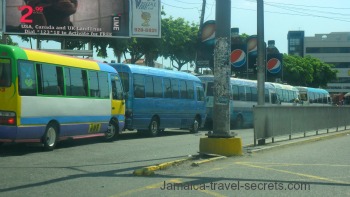
Minibuses serve rural districts, and government-run buses operate in towns. The network has improved, particularly in Kingston, where services run on a timetable and are more reliable than in the past. If time is short, public transport is rarely the best choice, with the exception of the newer express services. Along the north coast, minibuses are the alternative to taxis. They are faster, but crowded, they stop often and they leave only when full. The trade-off is a lively ride, often with stories and dancehall or reggae at full volume.
By express shuttle
For long hauls, coach services offer far more comfort. Routes link Kingston, Ocho Rios, Montego Bay and Negril, and the coaches are air-conditioned with television, water and a toilet on board. A separate operator runs a non-stop service from Kingston to Negril. Seats can usually be reserved online, by phone or at central ticket points.
By sightseeing bus
Guided tours let a trained driver-guide handle both the road and the commentary. Stops are made only when requested, and several established operators run tours island-wide. This is a relaxed choice for those who want the scenery without the planning.
By motorbike or scooter
In Ocho Rios, Montego Bay and Negril, scooters, mopeds, bicycles and motorcycles can be rented by the day or week. Negril’s long, flat roads make a scooter a practical way to get from a hotel to the town’s attractions. Always wear a helmet, and check your insurance.
By sea
Travelling by water is less common, but it is relaxing. A chartered boat or yacht can serve for sightseeing, a small party or a fishing trip. Guests at certain resort chains may also have access to catamaran cruises with food and drinks on board, and a coastal view of the island is a memorable one.
Which one should you choose?
- Short on time: domestic flight or express coach.
- Short on money: route taxi, minibus or public bus.
- Want freedom: rental car or scooter.
- Want to relax and look: sightseeing bus or boat.
Many travellers combine several of these in a single trip.