

Jamaican Food Guide: Jerk, Ackee and Saltfish and More

30,000 rooms
Transportation

Attractions



I am
Jamaican cooking is built on bold seasoning, slow cooking and a mix of African, Indigenous Taino, European, Indian and Chinese influences. The dishes most visitors meet first are jerk chicken or pork, ackee and saltfish (the national dish), curry goat, rice and peas, and the beef patty sold as a quick snack.
Here is a guide to the main dishes, what is in them and how to eat them. Names and recipes vary by cook and parish, so take the descriptions as typical rather than fixed.
Jerk: smoke, spice and pimento
Jerk is both a cooking method and a seasoning. Meat is rubbed or marinated with a paste that usually contains allspice (called pimento in Jamaica), scotch bonnet peppers, thyme, spring onion and other aromatics, then cooked slowly over a fire, traditionally with pimento wood.
Jerk chicken and jerk pork are the best known, but fish and sausage are also jerked. Roadside “jerk centres” often serve it chopped, with bread or festival, a sweet fried dumpling. The heat comes mainly from the peppers, and a milder version is usually available if you ask.
The technique is commonly linked to the Maroons, communities of formerly enslaved people who lived in the hills, although accounts of its origins differ.
Ackee and saltfish
Ackee is a fruit that arrived in Jamaica from West Africa. When it is ripe and the pods have opened naturally, the soft, creamy yellow flesh is cooked with salted cod, onion, tomato, scotch bonnet and sometimes bacon. The result looks a little like scrambled egg and is a classic breakfast, usually served with fried dumplings, boiled green bananas or breadfruit.
Safety matters: unripe ackee contains a toxin called hypoglycin, which can cause serious illness. Only fruit that has opened naturally should be eaten, and it should be prepared properly. That is why ackee is carefully regulated for export, and visitors should buy it only from reputable cooks and shops.
Curry goat
Introduced to the island by Indian indentured workers in the nineteenth century, curry goat is a staple at celebrations. Chunks of goat on the bone are simmered slowly with curry powder, thyme, pimento, garlic and scotch bonnet until tender. It is usually eaten with white rice or rice and peas.
Rice and peas
Despite the name, “peas” in Jamaica refers to kidney beans (or gungo peas, also called pigeon peas, at Christmas). They are cooked with rice, coconut milk, thyme, spring onion and pimento berries. This is the Sunday dish, often served beside chicken, and the creamy coconut flavour balances spicy meat.
Other dishes to know
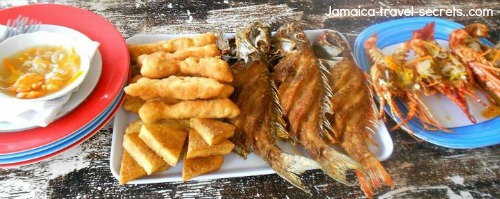
- Escovitch fish: fried fish topped with a tangy, pickled mixture of onions, carrots and peppers.
- Oxtail: braised until the meat falls off the bone, often with butter beans.
- Callaloo: a leafy green similar to spinach, steamed with onion, tomato and sometimes saltfish.
- Bammy: a flat cassava bread of Taino origin, fried or steamed and often eaten with fish.
- Festival: a sweet fried cornmeal dumpling, a common side with jerk.
- Run down: mackerel simmered in coconut milk until it “runs down” into a sauce.
- Mannish water: a soup made from goat, associated with celebrations.
Patties and street snacks
The Jamaican patty is a pastry filled with spiced beef, chicken, vegetables or cheese. It is baked with a golden crust coloured with turmeric or similar spices. A common lunch is a patty inside soft coco bread.
Other snacks include roasted corn, peppered shrimp from roadside stalls near Middle Quarters in St Elizabeth, and fried plantain. Parts of western and south-western Jamaica were affected by Hurricane Melissa in October 2025 (FCDO, current at 22 October 2026), so stalls and restaurants there may have changed hours or locations; ask locally.
Drinks and sweets
Jamaica is known for Blue Mountain coffee, ginger beer, sorrel drink (made from hibiscus and typically served at Christmas), and Ting, a grapefruit soda. Sweet treats include gizzada (a coconut tart), grater cake, and rum cake.
How to order and eat well
- Look for places busy with locals at lunchtime.
- Ask about heat. Scotch bonnet peppers are hot, and some dishes are served with the pepper left whole.
- Share a few dishes so you can taste more variety.
- Do not be afraid to ask what is in a dish, especially if you avoid pork or have allergies.
Seasonal food traditions
Some foods are tied to dates. The Easter bun and cheese tradition is one example, and it features in the April events guide. For a broader discussion of the island’s cuisine, see the overview of Jamaican foods.
Frequently asked questions
What is the national dish of Jamaica?
Ackee and saltfish is widely recognised as the national dish. It combines the ackee fruit with salted cod and is typically eaten for breakfast.
Is Jamaican food always spicy?
No. Jerk and some curries carry heat from scotch bonnet peppers, but many dishes, such as rice and peas, stew peas and fried fish, are not very hot. You can ask for milder versions.
Is it safe to eat ackee?
Properly ripened and prepared ackee is a normal food in Jamaica. The danger comes from eating unripe fruit, so buy from reliable cooks and follow local guidance.
What is a good vegetarian option?
Ital cooking, which comes from the Rastafari tradition, is plant-based and often uses vegetables, beans and coconut. Look for ital restaurants and stalls.
To finish
Begin with jerk and a side of festival, then try ackee and saltfish at breakfast and curry goat on a slower afternoon. Flavours depend on the cook, so each plate will be a bit different. The home page links to more travel notes.